

The Most Important Words Mistranslated or Misinterpreted Affecting our Perception
Sometimes we use “important” words that carry a conditioned interpretation, and most of the time, they don’t express the real and deeper meaning they should.
As we can see on the following pages, words like sin, faith, forgiveness, love, heaven, and God have a wider interpretation after thousands of years of constant adaptation and translation. All of these words carry a “weight” of importance because they try to define greater meanings, but they often end up representing a shallow tone of truth.
The first section shows the words translated from dictionaries available online. If we stop for a moment to really read what is “officially” related to their meaning, we may realize that it is partially or even totally untrue. The current narrative provides a very superficial meaning, and some definitions may even miss the real essence of what the words are pointing to. This creates an unconscious “low-quality” language whenever we use these words in conversation or even when thinking about them.
In the second section, we look at the etymology of these words, trying to understand their root meaning and realize the more profound truth they may represent. So, maybe next time when we think or use these words, we can feel their true essence more deeply and integrate them into our daily conversations, creating a more profound experience and perception.
At the end of each section, there are links to videos from Eckhart Tolle and Alan Watts, explaining and providing additional insights into the meaning of some of the words listed here.
The goal here is to bring attention to the deeper meaning of these words and the influence they have on our daily inner conversations, thoughts, feelings, and interactions with others. Free from dogmas and preexisting interpretations, we may realize that these basic words shape the way we act and may create a new way to communicate our deepest truths and feelings.
First Section
The Most Important Words Mistranslated or Misinterpreted Affecting our Perception
SIN – FAITH – FORGIVENESS – LOVE – KINGDOM OF HEAVEN – GOD
Meanings based on dictionaries available online:
SIN – Usually related to bad behavior or guilt, and has meanings defined on Dictionaries as following:
“Sin or a sin is an action or type of behavior which is believed to break the laws of God.” – Collins Dictionary
“…any act regarded as such a transgression, especially a willful or deliberate violation of some religious or moral principle.” Dictionary.com
FAITH – Usually related to religion believes and feelings of hope, as show on dictionaries as:
“belief that is not based on proof”…”belief in God or in the doctrines or teachings of religion”… “confidence or trust in a person or thing” – Dictionary.com
“allegiance to duty or a person: loyalty”…” fidelity to one’s promises” …” belief and trust in and loyalty to God”… – Webster
FORGIVENESS – Usually related to pardon, mercy, absolution or feeling of tolerance, as show on Dictionaries as:
“tolerant: “…”disposition or willingness to forgive.” …” to grant pardon for or remission of (an offense, debt, etc.); absolve.” Dictionary.com
“pardon, mercy, absolution, exoneration”…” the act of forgiving or the state of being forgiven “ – Collins Dictionary
LOVE – Usually related to romantic or passionate feelings, or affection…
“Love is a very strong feeling of affection towards someone who you are romantically or sexually attracted to.”. – CollinsDic
“strong affection for another arising out of kinship or personal ties ”…” affection based on admiration, benevolence, or common interests” – Webster
KINGDOM OF HEAVEN – Usually related to a “place” where God is present ruling the World…
“the spiritual domain over which God is sovereign.” – TheFreeDictionary.com God” – Wikipedia
“Kingdom of God, also called Kingdom Of Heaven, in Christianity, the spiritual realm over which God reigns as king, or the fulfillment on Earth of God’s will. The phrase occurs frequently in the New Testament, primarily used by Jesus Christ in the first three Gospels.” – Britannica.com
GOD – Usually refer to a Supreme Being creator of the Universe…
“the one Supreme Being, the creator and ruler of the universe”…” (lowercase) one of several deities, especially a male deity, presiding over some portion of worldly affairs.” – Dictionary.com
“the Being perfect in power, wisdom, and goodness who is worshipped as creator and ruler of the universe” – Webster
Second Section
Etymology of The Most Important Words Mistranslated or Misinterpreted Affecting our Perception or Awareness
“Etymology – The study of the origin of words and the way in which their meanings have changed throughout history.”
SIN (Hebrew root translation)
One of the most commonly mistranslated Hebrew words is chait, which we usually see translated as “sin.“ Sin is one of those words we tend to find repellant. Many of us grew up in non-Jewish societies and as a result of that influence we think of sin as some horrible evil, connected with endless guilt, eternal damnation and a host of other associations that are equally unpalatable. Does chait really mean that? No.
The meaning of the word is usually defined by the context of how it is used. So for example, In the Book of Judges (20:16), slingers from the tribe of Benjamin are described as being so good with their weapon that they can “aim at a hair and not chait.“
Could this mean to “aim at a hair and not sin”? It makes no sense. Obviously, the text means to aim at a hair and not “miss,” i.e. not to hit off target. “Off target,” “not reaching the mark,” “mistake,” and “unintentional” are all indications that the word chait does not mean “sin.”
A more accurate translation of the Hebrew chait is “error” or “mistake.“ People don’t “sin.” People make mistakes. After all, we are human, and [we need] to learn from our mistakes. We apologize, clean up any mess, and move on with life. The most common word translated as “sin” is chait.
Credit: Rabbi Shmuel Silinsky
SIN (Greek root translation)
The common Greek word for sin used in the New Testament is hamartia. This word derives from a technical word used in archery. It literally means to miss the mark. It can be used to express willful rebellion against God as well as making a mistake and falling short. Because the word hamartia is used in such a broad variety of contexts, one can see that the word sin in English also carries with it a fairly wide variety of connotations. One should let the context of an individual passage determine the sense in which the word sin is to be interpreted. The overall sense one gets from the Bible is that God is concerned both about the willful, blatant sins and the unintentional breaking of God’s will as well–the falling short and missing the mark God has set for us.
Credit: John Oakes, PhD
FAITH – Etymology
The English word faith is thought to date from 1200–1250, from the Middle English feith, via Anglo-French fed, Old French feid, feit from Latin fidem, accusative of fidēs (trust), akin to fīdere (to trust)
The word translated as “faith” in the New Testament is the Greek word πίστις (pístis) which can also be translated “belief”, “faithfulness”, and “trust”. There are various views in Christianity regarding the nature of faith. Some see faith as being persuaded or convinced that something is true. In this view, a person believes something when they are presented with adequate evidence that it is true.
American biblical scholar Archibald Thomas Robertson stated that the Greek word pistis used for faith in the New Testament (over two hundred forty times), and rendered “assurance” in Acts 17:31 (KJV), is “an old verb meaning “to furnish”, used regularly by Demosthenes for bringing forward evidence.”Tom Price (Oxford Centre for Christian Apologetics) affirms that when the New Testament talks about faith positively it only uses words derived from the Greek root [pistis] which means “to be persuaded”.
Credit: https://en.wikipedia.org/wiki/Faith
LOVE – Etymology
The word love goes back to the very roots of the English language. Old English lufu is related to Old Frisian luve, Old High German luba, Gothic lubo. There is a cognate lof in early forms of the Scandinavian languages. The Indo-European root is also behind Latin lubet meaning it is pleasing and lubido meaning desire. The word is recorded from the earliest English writings in the 8th century.
Credit: http://www.english-for-students.com/Love-2.html
FORGIVENESS – Etymology
The root of “forgive” is the Latin word “perdonare,” meaning “to give completely, without reservation.” (That “perdonare” is also the source of our English “pardon.”)
When the Latin “perdonare” was adopted into the Germanic ancestor of English, it was translated piece-by-piece, making the result what linguists call a “calque” (from the French “calquer,” to trace or copy) a literal transliteration. “Per” was replaced by “for,” a prefix that in this case means “thoroughly,” and “donare” with “giefan” (“to give”).
In the Old Testament, there are two primary Hebrew words which are translated as “pardon”, “pardoned” “forgive”, “forgiveness”, “forgiven” or “forgiving”. These are “nasa” and “salah”. Harris, Archer and Waltke say “nasa” means “the taking away, forgiveness or pardon of sin, iniquity and transgression.
http://internetbiblecollege.net/Lessons/Hebrew%20And%20Greek%20Words%20For%20Forgiveness%20Or%20Pardon.htm
A New Way of Seeing and Transcending “Forgiveness”
When the mind and reason speak, it says, “Why should I ‘give’ anything to the person who hurt me, lied, disrespected, betrayed, and attacked me?” This voice will continue to provide reasonable stories about why it is not acceptable to “forgive” … “You don’t know what he/she has done to ‘me’… The only thing I want to ‘give’ is a punch, a kick, and a scream…” — the voice continues.
To perceive and “see” the other with a different view is not an easy task for anyone alive today. Experiences, circumstances, emotions, reactions, and many other forms of expression definitely obscure our “vision.”
How deeply can we “see” within and recognize this pattern in our daily choices? Can we see without judgment and reaction? Can we observe the internal dialogue and emotions and realize the “drama” unfolding? How do you see “yourself” or others in your thoughts? Is there anger, hate, or unhappiness in the background? Can you “see” the unconsciousness in yourself as well as in others, or only the mistakes and horrible experiences you or they created?
If you can’t see the unconsciousness deeply rooted in yourself or in another’s behavior, then there is no way to have a “vision” or transcend the illusion of life’s drama. Sure, it is not easy to “forgive” yourself or others… The sense of guilt or victim identity will definitely play a role in this drama.
But anyway, who can “be the first one to throw a stone if they have not also ‘sinned’ [made mistakes, hurt, or mistreated others]?”
FORGIVENESS
Transcending old interpretations
“There is a fine balance between honoring the past and losing yourself in it. For example, you can acknowledge and learn from mistakes you made, and then move on and refocus on the now. It is called forgiving yourself.“
Eckhart Tolle
“No form of sacrifice and suffering can long endure before the face of one who has forgiving and blessed [ himself / herself ].“
A Course in Miracles
KINGDOM OF HEAVEN – Etymology
In the synoptic Gospels (which were written in Greek), Mark and Luke use the Greek term “Basileia tou Theou,” commonly translated in English as “Kingdom of God,” while Matthew prefers the Greek term “Basileia tōn Ouranōn” (Βασιλεία τῶν Ουρανῶν) which has been translated as “Kingdom of Heaven.” Biblical scholars speculate that the Matthean text adopted the Greek word for “heaven” instead of the Greek word for “God” because—unlike Mark and Luke—it was written by a Jew for a Jewish audience so, in keeping with their custom, avoided using God’s name as an act of piety. In Matthew, “heaven” stands for “God.”
Credit: https://www.newworldencyclopedia.org/entry/Kingdom_of_God
GOD – Etymology
Oddly, the exact origin of the word God is unknown. All that we know for certain is that the word God is a relatively new European invention, which was never used in any of the ancient Judaeo-Christian scripture manuscripts which were written in Hebrew, Aramaic, Greek or Latin.
This situation is quite remarkable, since there is a long history of people arguing and fighting over the name of God, yet we don’t even know where this European-invented word God came from!
Amusingly, none of the prophets, sages and disciples who wrote down the various books of the Bible would recognize or understand this recently invented word God. Yet people fight over it!
The word God was used to represent Greek Theos and Latin Deus in Bible translations, first in the Gothic translation of the New Testament by Ulfilas. For the etymology of deus, see *dyēus. Greek “θεός ” (theos) means god in English.
Credit: https://en.wikipedia.org/wiki/God_(word)
Now that you have the list of important words we use to express concepts such as sin, faith, forgiveness, love, heaven, and God—along with their traditional translations and etymologies—you can compare the meanings presented in each section. Try to grasp the deeper meaning of each word and reflect on whether it truly aligns with what you mean when you feel, think, or say these words. If you wish to explore these meanings further, you can access the videos by Eckhart Tolle and Alan Watts in the section below.

Third-Party YouTube’s Videos Related to the Messages and Teachings on this site can be accessed below

NOTE: It is recommended to use YouTube Premium service to view the videos below. You will be able to watch it Ad-free so you can immerse in the video’s messages without interruption. In addition, you can download videos to watch later when you’re offline or on the go; and also use in background play so you can watch while using other apps or with your screen locked.
To learn more about YouTube Premium please access the link https://www.youtube.com/premium
NOTICE: AwakeningView doesn’t have affiliation and don’t receive resource from Youtube or any of the third-party YouTube Channels listed here.
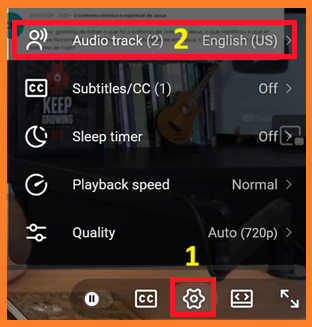
YouTube Videos are in English language.
If you need Auto Translate the video into another language, please chose SETTINGS > Audio Track > Chose language.
NOTE: Available only to YouTube Premium Account
The meaning of SIN according to Allan Watts
The meaning of FAITH according to Eckhart Tolle and Allan Watts

The meaning of LOVE according to Eckhart Tolle and Allan Watts


The Meaning of Forgiveness According to Eckhart Tolle


How Not Forgiving Can Delay Your Awakening | Eckhart Tolle
NOTICE: AwakeningView doesn’t have affiliation and don’t receive resource from Youtube or any of the third-party YouTube Channels listed here.
⚠️ Copyright Disclaimers
- We use images and content in accordance with the YouTube Fair Use copyright guidelines
- Section 107 of the U.S. Copyright Act states: “Notwithstanding the provisions of sections 106 and 106A, the fair use of a copyrighted work, including such use by reproduction in copies or phonorecords or by any other means specified by that section, for purposes such as criticism, comment, news reporting, teaching (including multiple copies for classroom use), scholarship, or research, is not an infringement of copyright.”
- These videos could contain certain copyrighted video clips, pictures, or photographs that were not specifically authorized to be used by the copyright holder(s), but which we believe in good faith are protected by federal law and the fair use doctrine for one or more of the reasons noted above.
- We do not claim ownership over any third-party content used. These videos may contain copyrighted material, the use of which has not always been specifically authorized by the copyright owner.
❓ Copyright Questions
- If you have any copyright questions or issues you can contact us at webmaster@awakeningview.org